


Confirmed Cyber Attack Hits 178 Major Websites, Including Banks and News Sites


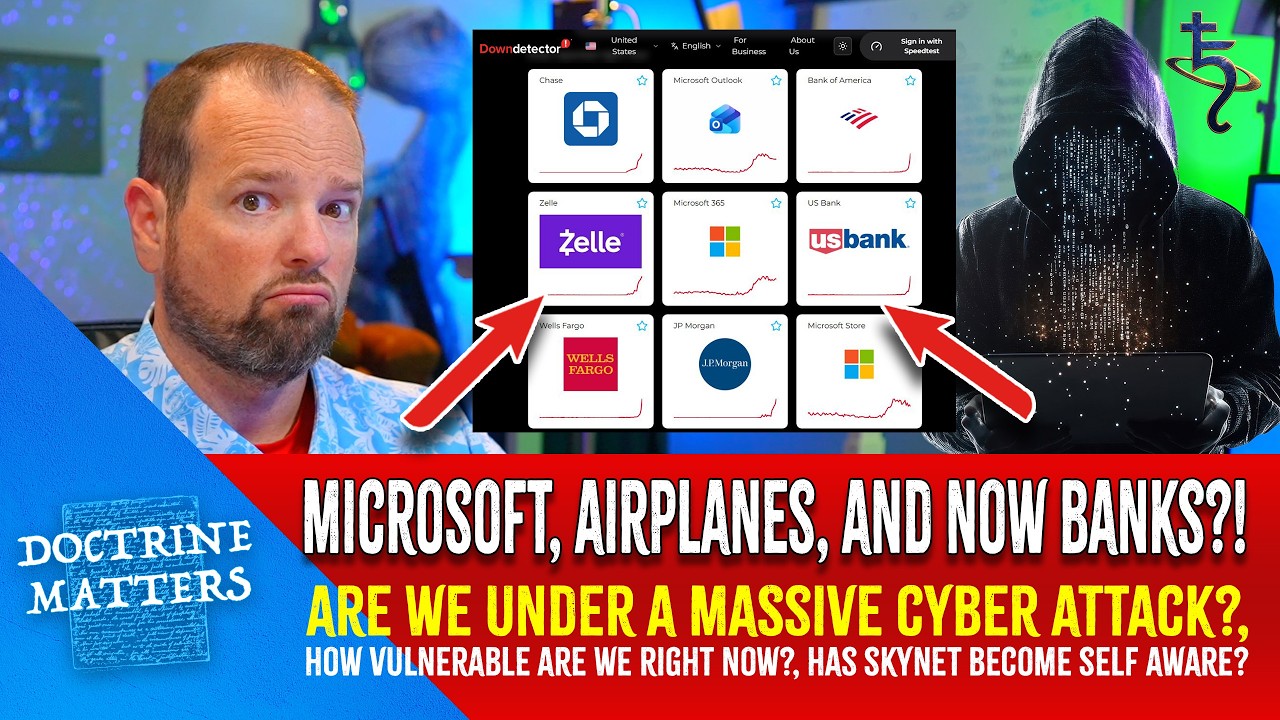
I wrote the other day about computer outages hitting Microsoft, the airlines, and major banks, and I said I thought something was up. You can read that article, Microsoft, Airplanes, and Now the Banks Go Down?!?! Cyber Attack?!, on Doctrine Matters. Those earlier problems have not been clearly explained as a cyber attack. This one has.
On November 16, 2026, security researcher Scott Helme and his team at Report URI found that malicious code had been served to visitors of 178 organizations through Optimizely, a company that lets businesses test and change their websites. Report URI checked 1,611 Optimizely scripts and found the infected code in 188 of them, belonging to those 178 organizations. Helme said the real number is likely higher, because they could only check the scripts they could find in time.
The names on the list should get your attention. They include Zoom, CNN, Fox News, the BBC, NPR, IKEA, HSBC, Equifax, Salesforce, GitLab, Alaska Airlines, Air France, Ledger, Paychex, Invisalign, and Peacock. Report URI counted 32 organizations in banking and finance alone, along with news sites, airlines, retailers, healthcare companies, phone companies, and nonprofits such as UNICEF USA and the ASPCA.
Helme told Newsweek this was a supply chain attack. "Compromise one trusted vendor, and its code runs on every customer's website at once," he said. The companies did not have to have their own servers broken into. They were loading scripts from a provider they already trusted, and that is what got exploited.
According to Report URI, the attackers wrote their own code into a field in the customer's Optimizely project called Project JavaScript. The rest of the file was left alone, and it was still served from Optimizely's own servers, with Optimizely's certificate, from a host those sites already trusted.
The malware was built to do several things at once. It swapped cryptocurrency wallet addresses for the attacker's addresses. It skimmed payment cards when people typed a card number, expiration date, and security code into a site's own forms. It stole cookies and screenshots. On iPhones and iPads, Report URI said it delivered the Coruna and DarkSword exploit kits. Cards entered in hosted payment windows from companies like Stripe were out of its reach. Cards typed into a site's own form fields were not.

Report URI traced about $7,040 in cryptocurrency payments to wallets linked to the attack within roughly nine hours on November 16. The researchers later recorded a slightly higher total as more payments came in, but they also said they have no way to see how many credit cards were skimmed, how many cookies or screenshots were stolen, or how many Apple devices were infected before the attack was stopped. Newsweek reported the same $7,040 figure and said the full financial impact is unknown.
Helme estimated that the malicious code may have been served during roughly 34 million page visits, with a possible range of 6 million to 150 million. He was careful to add, "That counts visits that loaded the code, not people who lost money or data. The actual harm is far smaller." John Walsh, a security executive at IGEL, told Newsweek that the 178 organizations represent potentially affected websites, not 178 confirmed corporate breaches or a known number of victims.
Optimizely said in a status update that "an unauthorized party exploited a vulnerability" in its Experimentation platform, and that "We've fixed the vulnerability and removed the injected code from affected projects." Report URI observed that all of the infected files it had been watching were cleaned by 6:11 PM Eastern time on November 16 and stayed clean after that.
Equifax told Newsweek it was aware of the reports, "immediately investigated this issue and ceased our use of Optimizely," and added, "We have not identified evidence of any compromise to our systems or impact to our data." IKEA told Newsweek it was investigating "to understand any potential impact on our digital services and customers."
What bothers me as much as what they did is what they could have done. Helme later wrote that once an attacker can inject any code he wants into some of the largest websites in the world, "the only things holding them back are their imagination and their ability to write the JS to do what they want to do." He said the only reason worse things did not happen "is because the attackers simply chose not to do it." That is a sobering thought for a society that has put its money, its travel, its news, and its private lives on websites it cannot live without.
Do you realize how fragile our society is? If half the debit cards in this nation stopped working for three days, we would have chaos. I used that line last week, and it still stands. We have to use these tools to get by, but these systems can crash, and one day they will crash for good with the fall of mystery Babylon in the book of Revelation. "Babylon the great is fallen, is fallen" (Revelation 18:2).
I do not think we need to become full preppers, but it is wise to be careful. If you visited one of those sites on November 16, especially if you entered payment details or sent cryptocurrency, check your bank and card statements, confirm that any crypto payment went to the address you intended, and watch for login notices you did not expect. "A prudent man foreseeth the evil, and hideth himself; but the simple pass on, and are punished" (Proverbs 22:3).
As Bible believing Christians we also need to remember that this world is not our home. We are just passing through. Jesus said of His disciples, "They are not of the world, even as I am not of the world" (John 17:16). It is getting rough out there, but remember that things are looking really good because things are looking really bad. Things are not falling apart. They are falling right into place. "And when these things begin to come to pass, then look up, and lift up your heads; for your redemption draweth nigh" (Luke 21:28). Praise the Lord.
Recommended Reading
Want to go deeper? Get my book Doctrine Matters: Bible Topic Guidebook on Amazon.


Comments